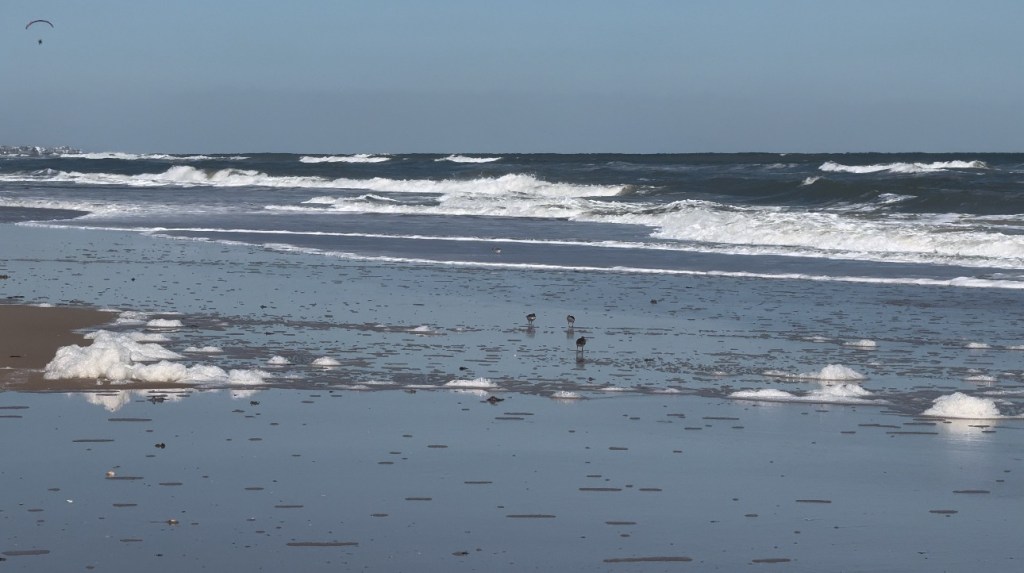
Throughout history, North Florida has witnessed many hardships through the eyes of its diverse people. African American history, in particular, is deeply intertwined with the south’s legacy of slavery, segregation, and Jim Crow laws, all of which left deeply rooted trauma in the community. However, in 1935, a man named Abraham Lincoln Lewis who wanted to give African Americans a place for recreation and relaxation without humiliation. This vision led to the creation of American Beach, the first beach resort in Florida specifically for African Americans. Abraham Lincoln Lewis, the president of the Afro-American Insurance Company in Jacksonville, Florida, was driven by a desire to offer his employees, and the broader African American community, a safe place to enjoy the beach without fear of discrimination or legal retribution. During this time, segregation severely restricted African Americans’ access to public spaces. They were forced to use separate bathrooms, water fountains, schools, and beaches, often facing harsh conditions and unequal treatment. As Florida’s first black millionaire, A.L. Lewis was uniquely positioned to challenge these barriers. His determination to create a beach resort for African Americans was not just an act of leisure but a stand against the oppressive system that marginalized his community. Through his efforts, American Beach became a symbol of resistance and empowerment, offering a space where African Americans could gather, relax, and celebrate their identity in a world that tried to keep them apart.
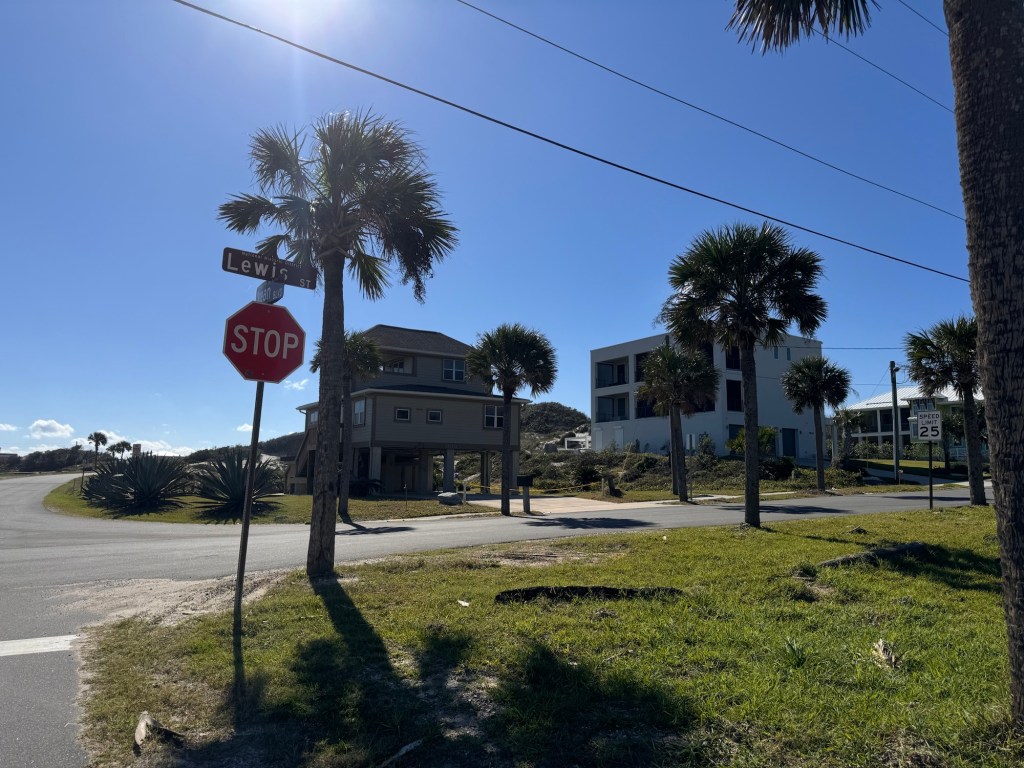
-Lewis St. By: Anna Newhoff
Abraham Lincoln Lewis was born in 1865, in the small town of Madison County, Florida to Robert and Judy Lewis, recently freed from slavery. The family later moved to Jacksonville, Florida in search of a better life. At the time, Jacksonville was known as the city of opportunity for African Americans, offering access to work and education. However, Abraham Lincoln Lewis’s formal education ended early when he dropped out of school at the age of 13 to work at a sawmill and help support his family. Despite only completing the sixth grade, Lewis had a deep thirst for knowledge and an unwavering drive for success. Lewis married the great-granddaughter of Zephaniah Kingsley and Anna Madgigine Jai, the couple who once operated the Kingsley Plantation on Fort George Island. In 1901, Lewis, along with six partners, founded the Afro-American Industrial and Benefit Association. This organization was designed to provide African Americans with life insurance and support in times of illness or death. In 1935, at the age of 70, as president of the Afro-American Insurance Company, Lewis led the company to purchase 33 acres of oceanfront property on Amelia Island, which was named American Beach. The land was subdivided into parcels and sold to company executives, shareholders, and community leaders. Later, after acquiring an additional 100 acres, the Afro-American Insurance Company offered land for sale to the wider African American community. In 1947, Abraham Lincoln Lewis passed away at his home in Jacksonville, Florida, but after his death American Beach became the place where African Americans could gather and relax without the constraints of segregation.
American Beach created an atmosphere that was relaxing and an escape for African Americans. One of its most popular attractions was a nightclub called Evan’s Rendezvous, often referred to as the heartbeat of American Beach. Established by Willie Evans, the 200-seat venue quickly became a favorite gathering spot for vacationers in the early twentieth century. Evan’s Rendezvous featured a beachfront porch where guests could enjoy food and drinks while listening to live musical performances and dancing. It became a cultural hotspot, with legendary artists such as Ray Charles, Cab Calloway, and Duke Ellington gracing its stage. The club remained open for forty years, offering a vibrant atmosphere and a sense of community to all who visited. In the years following its closure, Evan’s Rendezvous was bought by the Trust for Public Land, which sought to preserve and restore the historic building as part of its efforts to maintain the cultural heritage of American Beach. In 1964, American Beach faced multiple hardships, one of the most devastating being Hurricane Dora, which caused widespread damage, leaving many homes and businesses in ruins. That same year, the passage of the Civil Rights Act of 1964 brought significant changes to the community. The law ended legal segregation, meaning African Americans were no longer restricted to American Beach. Public beaches across the country were now open to both black and white visitors, marking a shift in the social and cultural landscape of American Beach.
As “For Sale” signs began to appear, the culture and landscape of American Beach started to change. While descendants of the original homeowners have kept their properties, many others have sold and moved on. A property owners’ association and local historical society, both named in honor of A.L. Lewis, aim to preserve part of the community’s heritage through a museum and community center. However, much of this preservation effort is credited to one woman: MaVynee Betsch, also known as “The Beach Lady,” the great-granddaughter of A.L. Lewis.In 1975, The Beach Lady dedicated her life and inheritance to the preservation of American Beach. She developed the plans for the A.L. Lewis American Beach Museum, which opened in 2014. The museum showcases the history of A.L. Lewis, the Beach Lady herself, and other significant events in American Beach’s history. Additionally, The Beach Lady played a key role in the preservation of Nana Dune, the tallest sand dune in Florida. The 8.5-acre dune is now owned by the National Park Service and plays a vital role in protecting the land from natural disasters, including hurricanes
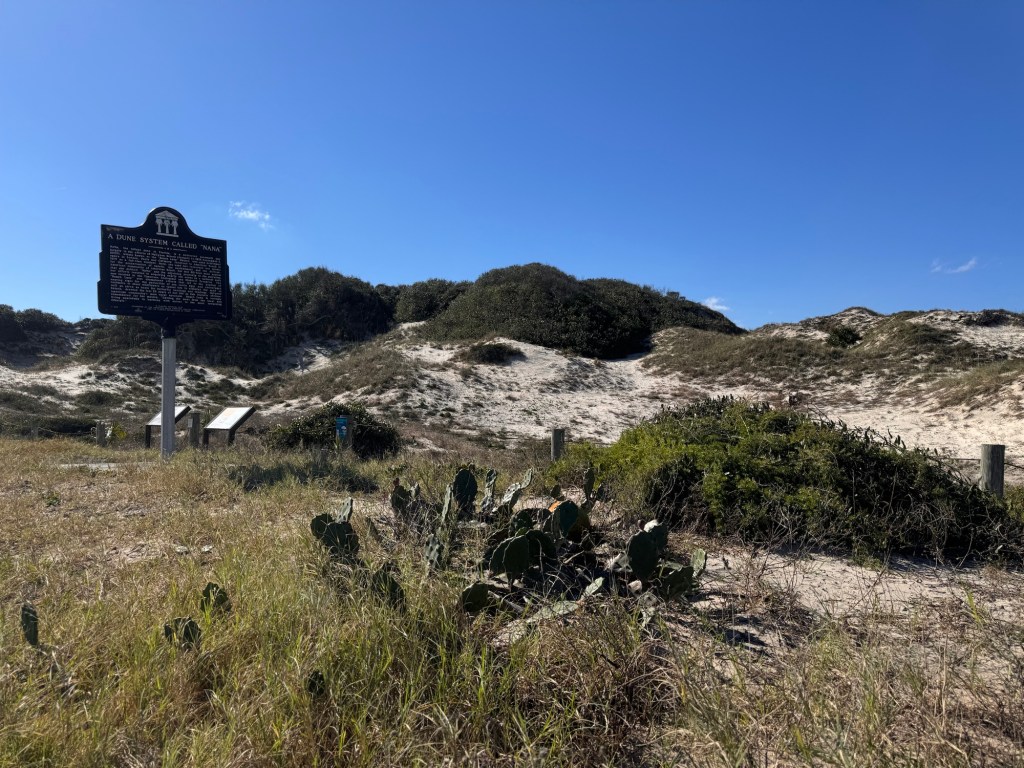
– Nana Dune By: Anna Newhoff
Today, American Beach is home to high-rise condominiums and beachfront mansions, with a rich mixture of cultures living throughout the area. Visitors can learn about the history of the community by visiting the A.L. Lewis Museum and exploring the historical markers scattered throughout the neighborhoods. As a resident of Nassau County, learning more about the Black history of American Beach has deepened my appreciation for this place that is a part of me. After visiting the A.L. Lewis Museum, I feel more knowledgeable about the area and the significant contribution A.L. Lewis made to the Black community by establishing American Beach.
BIBLIOGRAPHY
The Origins & History of American beach. A L Lewis Museum. (n.d.). https://allewismuseum.org/origins-and-history/
U.S. Department of the Interior. (n.d.). History of American beach. National Parks Service. https://www.nps.gov/timu/learn/historyculture/ambch_history.htm
U.S. Department of the Interior. (n.d.-a). American Beach Nana Sand Dune (U.S. National Park Service). National Parks Service. https://www.nps.gov/places/american-beach-nana-sand-dune.htm
Card, M. (2020, February 16). A.L. Lewis was a giant in Jacksonville. The Florida Times-Union. https://www.jacksonville.com/story/opinion/columns/2020/02/16/al-lewis-was-giant-in-jacksonville/112234934/
Evans Rendezvous. Abandoned Florida. (2024, May 25). https://abandonedfl.com/evans-rendezvous/
 Through Anna's Eyes
Leave a comment